Key takeaways
- Made-to-order is a selling point, not a confession. Say “crafted for you when you order” with a straight face and shoppers hear premium, not slow.
- Almost every timeline dispute starts with one wording mistake: telling the buyer when the order ships as if that were when it arrives. Always state the delivery date.
- Repeat the timeline at least four times: product page, cart, checkout, confirmation email. A buyer who saw the date four times doesn’t open a dispute on day six.
- Set your processing time to what actually happens, plus a small buffer. Understating it wrecks your on-time metrics; delivering a day early makes you look like a hero.
- Three messages (confirmation, in-production update, tracking) prevent nearly every “where is my order?” before it’s typed.
Stop apologizing for the thing they're paying for
Here’s a pattern I see constantly in new made-to-order shops: the listing reads like a legal disclaimer. “PLEASE NOTE: production takes time. We apologize for any inconvenience.” You’re selling a necklace with her daughter’s name on it, engraved after she orders it, and the copy sounds like a shipping delay notice from a cable company.
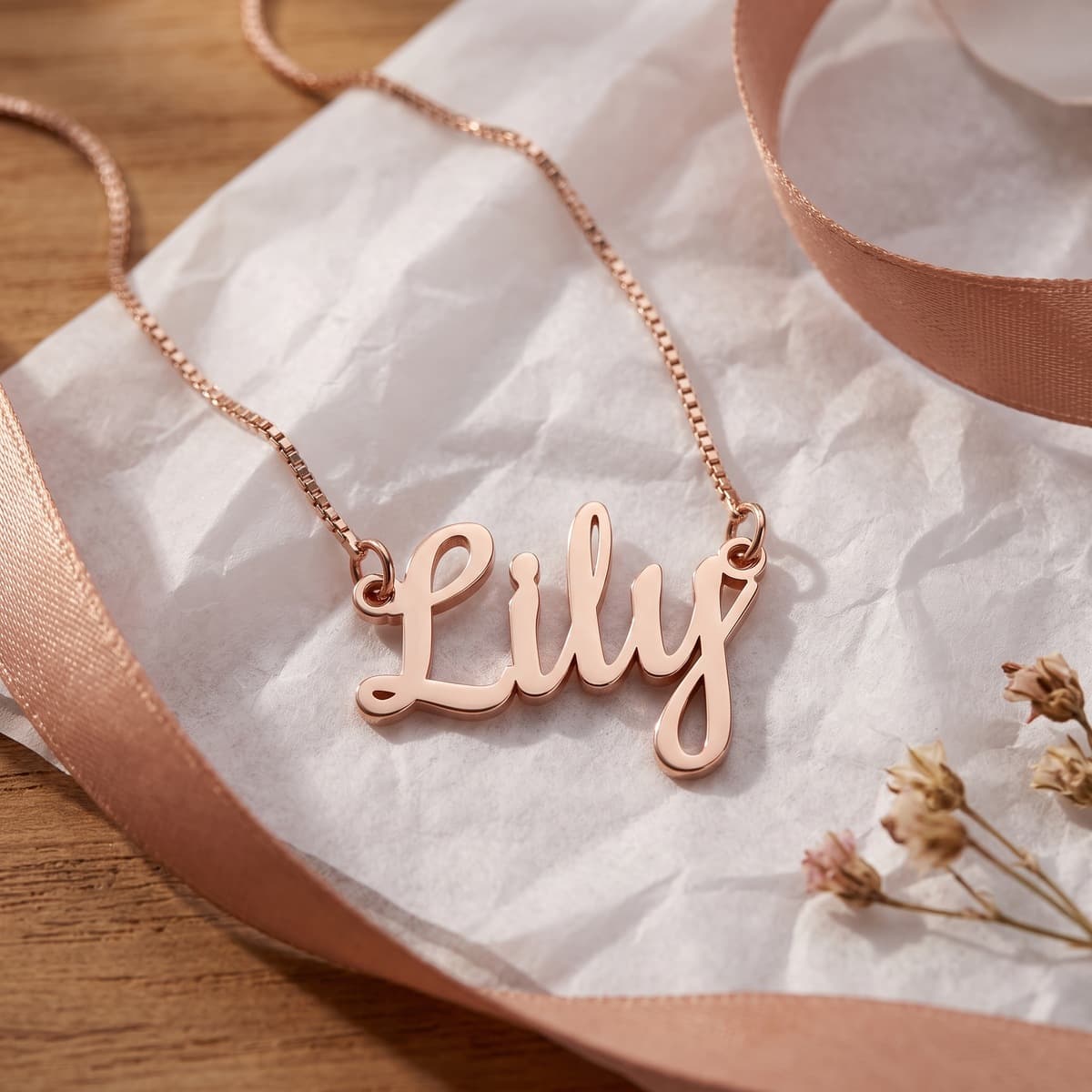
Flip it. Nobody expects a piece engraved with a specific name to be sitting in a warehouse. The production window is the proof that the piece is personal: it literally does not exist until your customer orders it. That’s the story a gift buyer wants to tell: “I had this made for you.” Shoppers know custom takes longer, and a meaningful share of them are explicitly fine with it:
The difference between a premium wait and an annoying wait is almost entirely in the copy. Same twelve-ish business days, completely different feeling:
- “Made to order, just for you. Engraving begins when you place your order.”
- “Crafted to order and shipped directly to you. Estimated delivery: about 12 business days.”
- “Each piece is engraved individually; no two are alike, and yours doesn’t exist yet.”
- “Ordering a gift? Check the date below to make sure it arrives in time.”
- “PLEASE NOTE: processing takes 12 business days. No exceptions.”
- “We apologize for the wait, but all items are made to order.”
- “Due to high demand, orders may take longer than expected.” (This reads as “we’re overwhelmed.”)
- Burying the timeline in an FAQ tab and hoping nobody needs it. They will, and they’ll be angry.
Ship date vs. delivery date: the mistake behind most disputes
If you fix only one thing after reading this guide, fix this. When a seller writes “ships in 12 business days,” the seller means “leaves production in 12 business days.” The buyer reads “arrives at my door in 12 business days”, or, worse, skims it as “arrives soon.” That gap is where disputes, refunds, and one-star reviews live.
With Jeweliful, the number you have is door-to-door: about 12 business days from the order landing to your customer receiving the package, shipped directly to them. That’s actually the easier story to tell, because you can talk about the date that matters: arrival. So talk about arrival, in calendar terms a human uses:
Use: “Estimated delivery: [date range]” or “Arrives in about 12 business days (roughly two and a half weeks).”
Avoid: “Ships in X days,” naked “processing time” jargon, or “12 days” without the word business. Twelve business days and twelve days are a whole weekend-filled week apart.
Say it everywhere (yes, again)
One clear sentence on the product page is not enough, because buyers don’t read. They skim, on a phone, while doing something else. The fix isn’t a longer paragraph; it’s repetition at every step where the buyer makes a decision. Wherever you sell (Etsy, Shopify or your own storefront), the timeline should appear at all of these points:
- Product page, above the buy button: one line, near the price, before they commit. Not in a tab, not below the reviews.
- Cart: a short reminder next to the item: “Made to order · arrives in about 12 business days.”
- Checkout: the estimated delivery date, shown before payment. This is the line that wins disputes later.
- Order confirmation: restate the date in the first message they get. This is the version they’ll search their inbox for on day eight.
It feels redundant when you set it up. It is redundant. That’s the point: a buyer who saw the date four times before their card was charged has agreed to it four times. A buyer who could have found it in an FAQ has agreed to nothing.
The marketplace math: how your settings become the buyer's date
Marketplaces compute the buyer-facing delivery estimate for you, so your job is to feed them honest inputs. On Etsy the formula is simple: processing time + carrier transit time = estimated delivery date, and your ship-by date is calculated from the top of your processing range. Shopify’s delivery-date feature (Settings → Shipping and delivery → Estimated delivery dates) works the same way, combining your fulfillment time with transit, and it learns from your actual fulfillment history, so honesty is literally built into the algorithm.
Translating Jeweliful’s door-to-door figure into settings:
- Start from the real numberAbout 12 business days door-to-door is roughly two and a half calendar weeks. That whole window has to be covered by your processing time plus your listed transit time. If the two together add up to less, the platform is promising your buyer a date nobody is going to hit.
- Set processing time to cover production, not to look fastBecause we ship direct to your customer rather than to you, your processing setting needs to absorb production and the part of transit your shipping profile doesn’t account for. Work backward: honest total, minus the transit time your listing shows, equals your processing time.
- Add a small bufferTwo to three business days on top. A public holiday, a carrier having a bad week, a customs queue on an order crossing a border: variance is real. The buffer means most orders arrive “early,” which buyers read as excellent service. Nobody has ever left a bad review for a package that showed up ahead of the estimate.
- Revisit quarterlyIf your last three months of orders consistently arrived faster, tighten the setting a little. If a holiday crunch is coming, widen it before the rush, not during.
The three-message cadence for a long lead time
Silence is what turns a normal wait into an anxious one. On a two-day Prime delivery nobody needs updates; on a two-and-a-half-week custom order, the buyer’s imagination fills every quiet day with “did they forget me?” Three messages, mostly automated, keep the imagination on your side:
- Instant confirmation: confirm the personalization AND restate the timelineOne message, two jobs: “We’ve received your order for a gold-plated name necklace engraved Olivia. Please reply within 24 hours if anything needs correcting, because engraving begins soon. Estimated delivery: about 12 business days.” Confirming the spelling in writing also protects you when a buyer claims they typed something else. (They do. Screenshots win.)
- The in-production update (day 3–5)A short note mid-wait: “Your piece is in production, being engraved and finished now. Still on track for delivery around [date].” This is the message most sellers skip, and it’s the one that does the most work: it lands right when the post-purchase glow fades and the “wait, where is that thing” feeling starts.
- Ship notification with trackingThe moment tracking exists, send it, with the estimated arrival restated. From here the carrier’s tracking page does the reassuring for you.
When they ask anyway: the WISMO reply that works
Even with a perfect cadence, some “where is my order?” messages will arrive, usually polite, occasionally spicy. The reply framework is four moves, in order: empathize (they’re not wrong to ask), restate the made-for-you story (remind them why it takes time), give a concrete date (never “soon”), and link the tracking or promise it by a specific day. Never open with a policy quote, and never make them feel like the first person to ever ask.
Notice what the template does: it answers the real question (a date), retells the story (made for you), and closes warm. A WISMO message answered this way within a few hours very often ends in a better review than an order that was never asked about: the buyer learned there’s a human on the other end.
Gift deadlines: the season that makes or breaks made-to-order
Personalized jewelry is overwhelmingly a gift purchase, which means your buyers have immovable deadlines you can’t see: Mother’s Day, Christmas, a birthday on the 14th. Two habits keep gift season profitable instead of catastrophic:
Publish cutoff dates before buyers ask. A banner or listing line (“Order by [date] for delivery by Mother’s Day”) does two things: it creates real urgency for early buyers, and it protects you from late ones. Calculate the cutoff from your honest timeline plus buffer, then stop promising the holiday on the cutoff day, not two days after.
Answer “will it arrive by X?” honestly, even when the answer loses the sale. “Honestly, it’s too close to be sure. I’d hate to promise and miss her birthday” costs you one order and earns you a buyer who trusts you with the next occasion. “Should be fine!” on a maybe-order costs you a refund, a dispute, and a public review that says you ruined a birthday.
And when production genuinely runs late (it happens), message first. A proactive “your piece is taking a few days longer than estimated; new expected delivery is [date], and we’re sorry for the wait” sent before the original date passes reads as a shop that’s on top of things. The same information delivered after the buyer complains reads as an excuse. Same facts, opposite outcomes. The only variable is who spoke first.
FAQ
Won’t a two-and-a-half-week timeline scare off buyers used to two-day shipping?
Some, yes, and those buyers were going to be your worst reviews anyway. Custom-goods shoppers self-select: they’re buying a piece with a specific name on it, and nearly half of consumers say they’ll wait longer for a customized product. Your job isn’t to hide the wait; it’s to make the wait mean something.
Should I quote “12 business days” to my customers verbatim?
Quote it with a buffer and the word “about,” and prefer a date range over a day count: “arrives roughly June 10–16” is clearer to a buyer than any number of business days. And never present it as guaranteed; it’s an estimate on our end too.
What if a buyer opens a dispute even though the timeline was stated everywhere?
Respond with the receipts, calmly: the timeline as shown at checkout, the confirmation message restating it, the tracking. This is exactly why the repetition matters: platforms side with whoever can show the buyer knew the date before paying. Then answer the human, not the case: most disputes close when a concrete delivery date shows up in the reply.
Do I really need the mid-production update message?
It’s the highest-leverage message of the three. Confirmation and tracking are table stakes; the in-production note is the one that arrives during the silent stretch where WISMO messages are born. One automated message versus a support inbox: take the message.
Can I offer a rush option for buyers who need it faster?
Don’t promise speed you don’t control. Production and transit have a floor, and a paid “rush” that doesn’t actually arrive faster is a refund with extra steps. The better lever is the front of the calendar: get gift buyers ordering earlier with visible cutoff dates.
When should I start showing holiday cutoff banners?
Earlier than feels natural. Gift shoppers browse weeks before they buy, and the banner is what converts a browser into an early-enough order. The gift calendar at Grow your shop already lays out the order-cutoff and listing dates for every US gift holiday, so pull your next deadline from there and put the banner up this week.