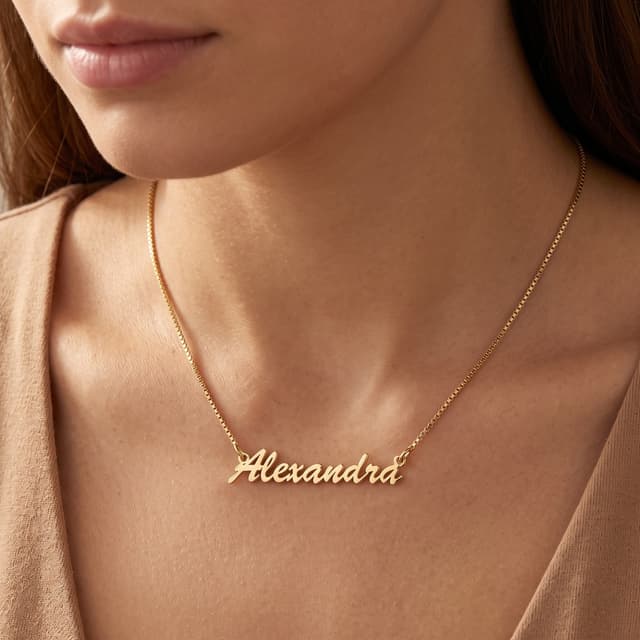
Key takeaways
- Every listing you run through us needs a declared production partner on Etsy. This is not optional, and it is not a gray area. It’s the single clearest rule in Etsy’s July 2024 Creativity Standards.
- “Made by” is the dangerous wrong answer. For buyer-personalized pieces produced by a partner, the honest category is “Sourced by”; if you contribute your own original design work, it’s “Designed by.”
- A well-written partner description reads as craftsmanship, not outsourcing. “A specialist jewelry workshop that makes each piece to order” sells better than silence, and it’s true.
- Your ship-from location must reflect where the package actually originates. For orders we fulfill, that’s our US fulfillment center.
- Undeclared partners get listings deactivated first and shops suspended eventually. Fixing it takes about fifteen minutes, once.
Why this guide exists
If you’re reading this inside our dashboard, you are, by definition, an Etsy seller working with a production partner. We make the jewelry; you sell it under your brand. That arrangement is explicitly allowed on Etsy, and it has been for years. What is not allowed is pretending the arrangement doesn’t exist.
In July 2024, Etsy replaced its old handmade policy with the Creativity Standards, and with them came something new: a visible label on every listing page telling buyers how the item came to be. Since then, the question “who actually makes this?” is no longer something you answer once during shop setup and forget. It’s printed on your listings, and Etsy checks it.
The good news: compliance here is genuinely easy. It’s a settings page, a paragraph of honest copy, and picking the right label. The sellers who get burned are almost never the ones who declared a partner badly. They’re the ones who never declared one at all, or who clicked “I made it” because it felt like the premium answer. Let’s make sure that’s not you.
The four labels, and the one that fits you
Under the Creativity Standards, everything sold on Etsy must fall into one of four categories, based on your involvement in creating it:
- Made by a seller: physical items you make yourself, by hand or with your own tools.
- Designed by a seller: your original designs, produced or printed by a third party (or sold as digital downloads).
- Sourced by a seller: craft and party supplies, plus items personalized with a buyer’s custom text or image and produced by a production partner.
- Handpicked by a seller: vintage, items from nature, and curated collections you personally selected.
So where does a name necklace from our catalog land? For most of what you’ll sell through us (pieces where your customer supplies a name, a date, an engraving), the category that matches Etsy’s own definition is Sourced by a seller: an item personalized by the buyer and produced by your production partner. If you go further and contribute genuinely original design work of your own that we then produce, Designed by a seller is the honest label for those listings.
One honest caveat: the safest listings in this model are the personalized ones, because they fit Etsy’s written definition cleanly. A non-personalized catalog piece you list as-is, with no buyer customization and no design input from you, sits closer to the line. Etsy’s enforcement there has been uneven and its wording has shifted over time. Before leaning on those listings, check Etsy’s current Creativity Standards page rather than taking anyone’s summary (including ours) as final.
Declaring your production partner, step by step
The whole process lives in one settings page and takes about fifteen minutes, most of which is writing the description (we’ll hand you that below).
- Open the production partners pageIn Etsy’s Shop Manager, go to Settings → Production partners (Etsy has also labeled this “Partners you work with” in some versions of the interface) and click Add a new production partner.
- Fill in the partner's name and locationEnter the workshop’s business name and location. Etsy requires the real business name, but offers a privacy option so the name itself isn’t shown publicly in your shop, useful if you’d rather buyers not reverse-search your supplier. The location and your description do display publicly, so write them knowing buyers will read them.
The location is a required field and Etsy fills it from its own list, so type rather than paste: start typing, and choose the entry Etsy offers for New York, United States. Your Listing Kit prints the same value on every product, so your declaration and everything we publish stay in step, and if the value you read here ever changes, the new one is what to use.
- Write the About descriptionThis is the paragraph buyers can see. Describe what the partner does and what you do, honestly and in language that sounds like craftsmanship rather than logistics. Three ready-to-adapt versions are in the next section.
- Answer the partnership dropdownsEtsy asks a few dropdown questions about the nature of the partnership. These answers are for Etsy’s internal review only; they don’t appear on your listings. Answer them accurately; this is where Etsy decides your arrangement is legitimate.
- Attach the partner to every relevant listingCreating the partner profile isn’t enough: each listing we produce must reference it. When editing a listing, set the production partner in the listing details. For an existing shop, use bulk edit: select the listings, open Editing options, and change production partners for all of them at once.
- Check a live listing as a buyerOpen one of your listings logged out. You should see the category label and partner information in the item details. If it’s not there, the listing isn’t linked, so go back to step 5.
Writing a partner description that sells
Sellers dread this field because they imagine it reads as a confession: I don’t make this. Buyers don’t read it that way. Buyers read “a specialist jewelry workshop” and picture a jeweler at a bench, which (for what it’s worth) is roughly accurate. Made to order, by people who do only this, is a story worth telling; you’re allowed to use it.
Here are three descriptions you can paste and adapt:
Warm and simple: “We partner with a specialist jewelry workshop that crafts each of our pieces to order. Every necklace is made individually (cut, engraved, and finished after you order) and shipped to you from our US fulfillment center.”
Craft-forward: “Our personalized pieces are brought to life by an experienced jewelry workshop. Nothing sits in a warehouse: your piece is made for you, with your name or engraving, by jewelers who have been making personalized jewelry for years. We handle the designs you see in the shop and every detail of your order; they handle the metal. Finished pieces are shipped to you from our US fulfillment center.”
Short and confident: “Made to order by our production partner, a dedicated jewelry workshop, and shipped to you from our US fulfillment center.”
- Say “made to order”. It’s true, and buyers value it far more than fast shipping.
- Be specific about the work: cut, engraved and finished after the order comes in. Specifics read as craftsmanship; vagueness reads as hiding something.
- Describe the split of work honestly: you curate and run the shop, the workshop makes the jewelry.
- Keep one description and reuse it. Consistency across listings looks intentional.
- Don’t imply you personally make the pieces, anywhere: not in the About page, not in listing copy, not in messages.
- Don’t use the word “supplier” or “factory.” Accurate-ish, but it sells nothing and invites the wrong mental image.
- Don’t put a country of manufacture in the description. Etsy has a separate field for the partner’s location (step 2), and that is the only place a location belongs.
- Don’t claim design credit for catalog pieces you didn’t design. “Our designs” is fine as shop language; “I designed this” on a declaration is not.
- Don’t leave the field at one lazy sentence. This paragraph is free marketing space on every listing.
Ship-from location: match reality
Your listings’ shipping settings include an origin: where the package actually enters the mail. For orders we fulfill, that is our US fulfillment center, so the ship-from country on these listings is United States. The shipping profile is its own form, separate from the partner declaration in step 2, and it asks its own questions, so answer them for a parcel leaving the US. An origin that doesn’t match the parcel is the kind of mismatch that’s trivially detectable and hard to explain later, and the delivery estimate Etsy calculates from it is what your buyer is promised.
While you’re in shipping settings, set processing time honestly too. Our end-to-end timeline is roughly 12 business days from order to delivery; build your processing and transit estimates around that rather than promising a week and apologizing forever. Buyers of personalized jewelry expect made-to-order timelines; what they punish is surprises.
What actually triggers enforcement
Etsy doesn’t publish an enforcement playbook, so treat any specific ladder as informed reporting rather than gospel. Compliance-focused guides that track seller cases describe a familiar escalation: a warning and deactivation of the offending listing first, then shop-level restrictions and suppressed search visibility for repeat problems, and full suspension (appealable, slowly) for shops that look like they’re systematically misrepresenting.
What draws attention in the first place, from what sellers report, is inconsistency: a “Made by” shop shipping from a different continent than its stated location, tracking numbers originating somewhere no partner is declared, buyer complaints that the “handmade” item arrived in manufacturer packaging, and listings identical to those in dozens of other shops with no personalization or design input anywhere. Every one of those signals is avoidable with the setup in this guide.
The line to internalize: original designs or buyer-personalized items with declared third-party production are permitted; reselling someone else’s goods with no creative involvement is not. Your job is to stay visibly, documentably on the right side of it. The declaration, the category label, and the ship-from location are how you document it.
The AI-imagery rule, in brief
The same 2024 standards that labeled production also touched AI. The short version: AI-assisted work is allowed in defined ways, but it must be disclosed: sellers using AI-generated imagery or designs are expected to say so in the listing rather than passing the output off as photography or hand illustration. If you create your own product mockups or lifestyle imagery with AI tools, disclose it in the listing description, and check Etsy’s current policy for the exact wording they expect, because this corner of the rules has been evolving faster than the rest.
This applies wherever you sell, not just on Etsy. Marketplaces and ad platforms are converging on disclosure, and the shops that disclosed early have had nothing to retrofit.
FAQ
Do I have to show Jeweliful’s name publicly?
No. Etsy requires the real business name in the declaration, but the form includes a privacy option so the name isn’t displayed in your shop. The partner’s location and your description do appear publicly, which is why the description is worth writing well.
Which category do I pick for a personalized name necklace?
Buyer-personalized items produced by a production partner match Etsy’s definition of “Sourced by a seller.” If a listing is your own original design that we produce, that’s “Designed by a seller.” Never “Made by” for anything you don’t physically make yourself.
Can I list non-personalized pieces from the catalog?
It’s the least protected corner of this model. With no buyer personalization and no design input from you, a listing looks more like reselling to a reviewer. Favor the personalized versions of our designs (there are plenty) and check Etsy’s current policy before building a shop on as-is pieces.
My shop has been live for a year with no partner declared. Am I in trouble?
You’re in the most common situation there is, and the fix is the same fifteen minutes as a new setup: create the partner profile, then bulk-edit it onto every listing we fulfill. Retroactive honesty beats discovered dishonesty by a wide margin.
Will the label scare buyers off?
The label has been on every Etsy listing since mid-2024, so buyers see it constantly and mostly don’t blink. A confident description (workshop, made to order, shipped from the US) tends to read as a craftsmanship story, not a disclaimer.
Does any of this apply off Etsy?
The declaration mechanics are Etsy’s, but the principle (describe your production honestly wherever you sell) travels everywhere, and platforms are drifting in Etsy’s direction, not away from it.
Once your declaration is set, the compliant move is also the profitable one: more personalized listings. Pick your next ones from the 850+ designs in the catalog.